

Virginia Landmarks Register Spotlight: Grace Church, Yorktown
A look at the unique history and ongoing preservation of one of the Commonwealth’s oldest architectural landmarks.
By Austin Walker | National Register Program Manager
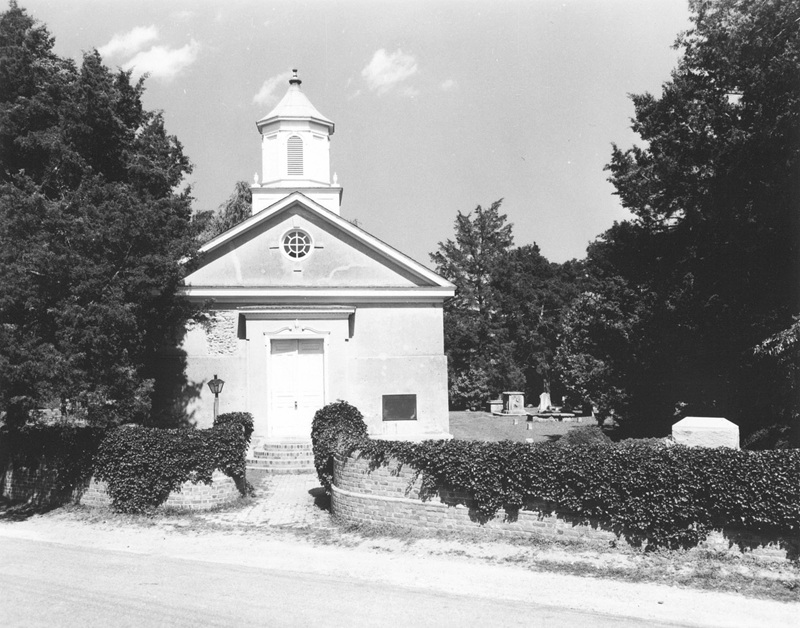
Among the more than 3,400 properties and districts listed in the Virginia Landmarks Register, few can claim to have witnessed as much of the Commonwealth’s history as Yorktown’s Grace Church. Built circa 1697, Grace Church is one of about 50 listed colonial-era churches in Virginia. When considering only those built prior to 1700, that number shrinks to three. (The others are St. Luke’s Church in Isle of Wight County and St. Mary’s Whitechapel in Lancaster County, though the latter building predominantly dates to circa 1740.)
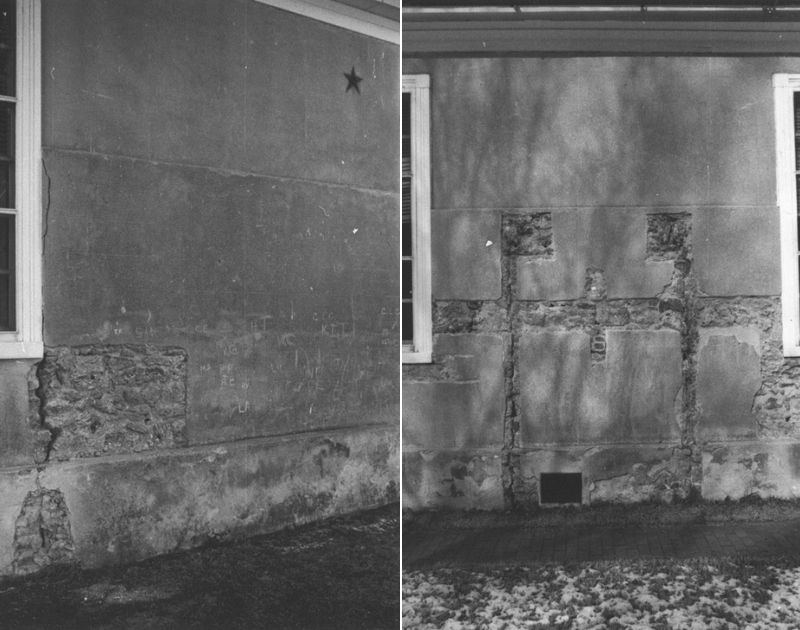
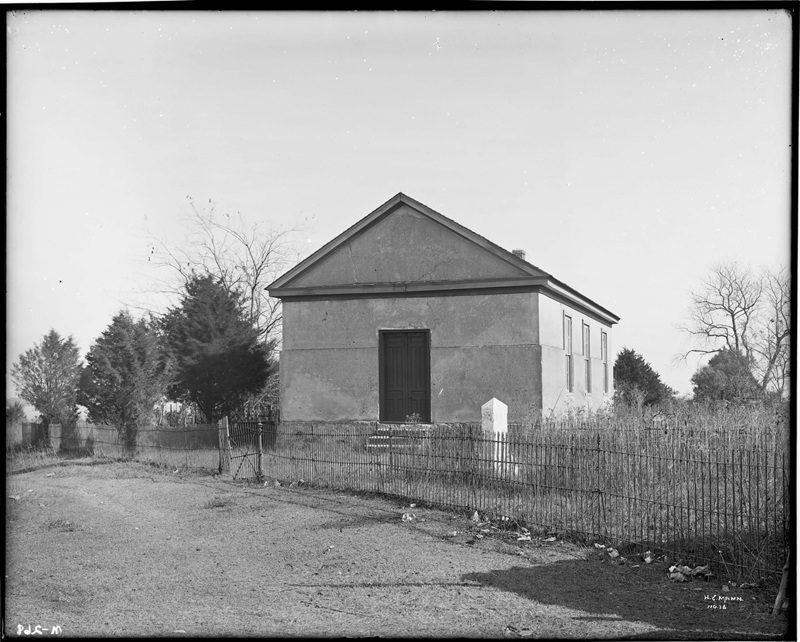
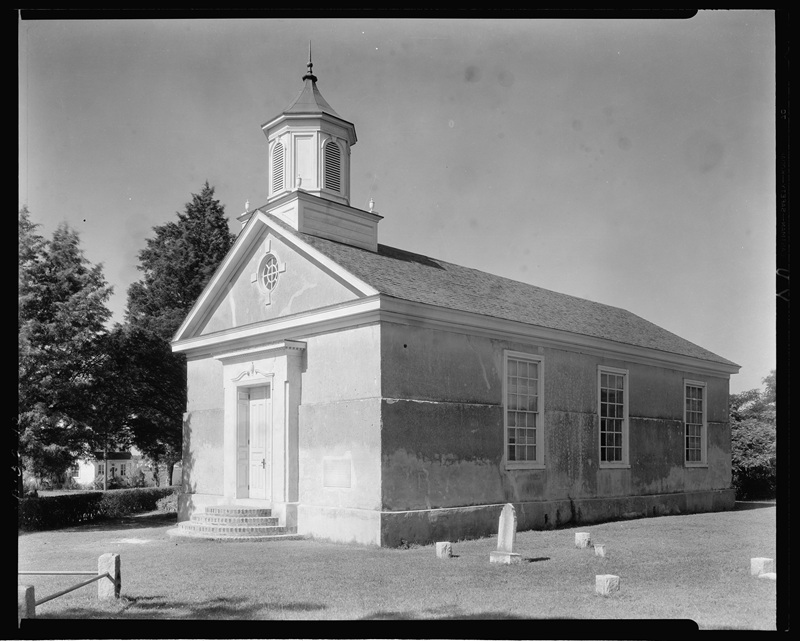
Apart from its age, what sets Grace Church apart architecturally is its unique method of construction. Though clad in stucco since the mid-19th century, the building’s exterior walls are constructed of marl, a substance made up of shells from various forms of marine life mixed with silt and clay from the nearby riverbed. Commonly used in cement production, marl is pliable when wet but hardens almost to the consistency of stone with exposure to sun and air. In the case of Grace Church, blocks of marl were cut from the York River cliffs and laid in masonry form to set. While the material was employed elsewhere in early Yorktown, Grace Church is thought to be the Commonwealth’s only surviving colonial structure built of marl.
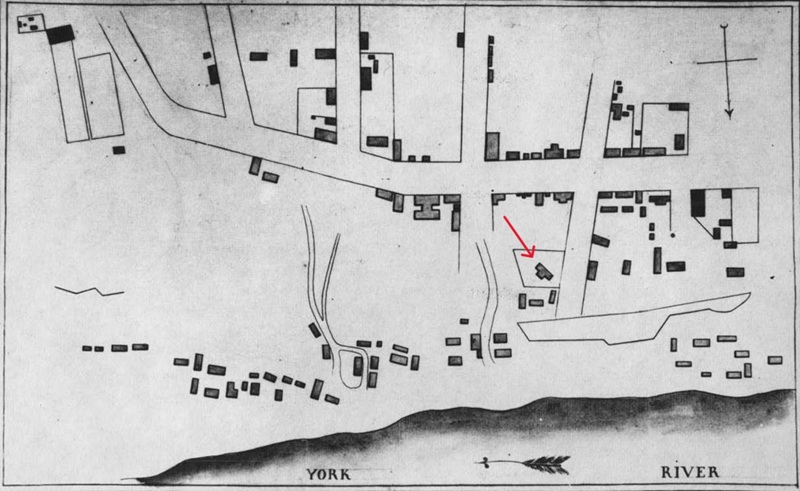
At the time of its completion, Grace Church was the third building to serve York Parish, which initially came into being around 1638. The first parish church was in use by 1642, located in the nearby village of York along Wormeley Creek. A brick church measuring 42 feet by 24 feet replaced this building in 1667; a 1655 tombstone within the surviving foundation walls indicates that the two buildings shared the same site. Following the establishment of Yorktown in 1691, the parish church, along with the county courthouse, quickly relocated to the area’s new center of activity. York Parish went on to merge with the adjoining parishes of Hampton in 1707 and Martin’s Hundred in 1712, with the 1697 building serving as York-Hampton Parish Church throughout the 18th century.
As originally constructed, Grace Church was rectangular in plan, measuring 28 feet by 55 feet, with its long axis oriented due east-west, resulting in the building’s angled placement on its lot. However, as Yorktown flourished during the early 18th century, the church congregation quickly outgrew this space. Sometime around the middle of the century, an addition measuring 28 feet by 29 feet was built on the north side of the building, giving the church a “T” shape. According to a 1970 study of the church completed by Charles Hatch of the National Park Service, this wing was also constructed of marl walls measuring “some 27 inches thick.” A brick wall was also first constructed around the churchyard during this period.
Years prior to the American Revolution, Grace Church would find itself adjacent to burgeoning revolutionary sentiment in the Commonwealth. Rev. John Camm, who took over the York-Hampton parish in 1749, became a central figure in the controversy surrounding the Two Penny Acts of 1755 and 1758. In the autumn of 1758, upon a vote by 35 Anglican clergymen, Camm himself traveled to London to petition the Privy Council to overturn the Acts. While his petition was successful, the ensuing fallout set an early precedent for rebellion against the British Crown. The dispute eventually culminated in the 1763 court case known as the “Parsons’ Cause,” during which Patrick Henry first rose to prominence for his advocacy in favor of colonial rights.
Grace Church’s most notable association with the American Revolution comes through one of its congregants: Thomas Nelson, Jr. (1739-1789). The son of merchant and politician William Nelson (1711-1772), who served for over two decades in the General Assembly and as acting Governor of Virginia between 1770 and 1771, Thomas was first elected to the House of Burgesses in 1761, representing York County until 1775. That year, he was elected to attend the Second Continental Congress, where he signed the Declaration of Independence in 1776. A brigadier general in the Virginia militia, Thomas led one-third of the American forces at the Siege of Yorktown in 1781. Only a few months prior, he had been elected to succeed Thomas Jefferson as Governor of Virginia. Following his death in Hanover County in 1789, Thomas was buried in the cemetery at Grace Church alongside his father and grandfather, Thomas “Scotch Tom” Nelson (1677-1747).
Grace Church suffered substantial damage during the Siege of Yorktown in 1781, with General Cornwallis commandeering the building as a powder magazine during the battle. The pews and windows of the church were destroyed, though the building ultimately survived the town’s bombardment by American and French forces and was quickly restored for religious use. However, a devastating fire in early 1814 destroyed all but the church’s marl walls, with other structures in the vicinity also suffering heavily. While the York-Hampton Parish remained active—holding services in homes and public buildings—the shell of the church would stand in ruin for more than three decades.
Efforts to restore the church initially began in 1841, though early attempts proved unsuccessful. Interest in the endeavor was renewed around 1845, with serious fundraising efforts underway by 1847. A contract was drawn up indicating that the church would be “rebuilt on its old site and partly on its old walls,” and by the fall of 1848, the building was once again ready for services. The restored church was consecrated in September of that year, when it became known as Grace Church for the first time.
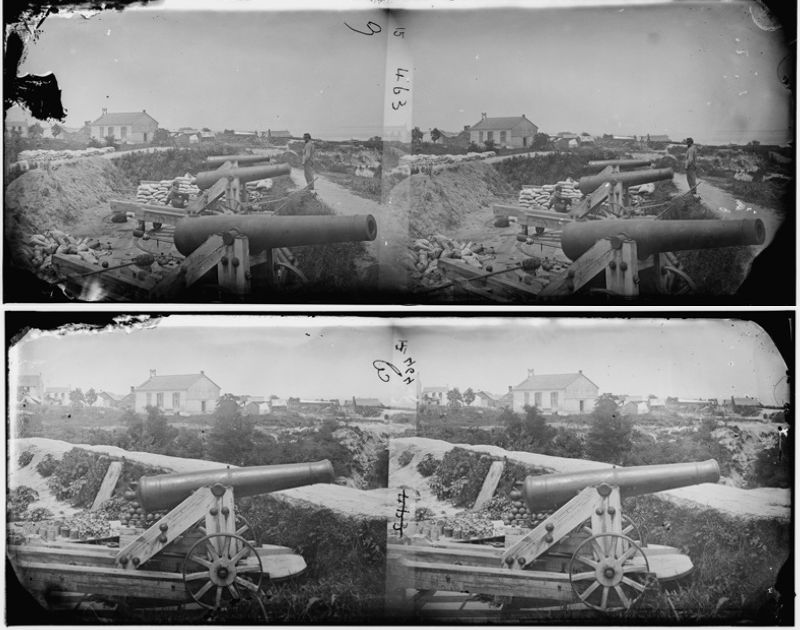
The 1848 restoration marked a return to the church’s original rectangular plan, though the foundation walls of the north wing were left standing just above ground. The application of stucco to the marl exterior walls also dates to this period or shortly after, as it appears in photographs taken during the Civil War. Although it is said that Grace Church was used as a hospital during the 1862 Siege of Yorktown, and that Union troops erected a signal tower on its roof, wartime reporting on the church is relatively scant. However, a pair of 1862 stereographs offer a glimpse of the building shortly after its restoration. Visible even at a distance is the second offset of the church’s exterior walls, a simple but distinctive feature that remains today.
Grace Church would attain its current appearance in 1926 when, in the midst of the Colonial Revival movement, the Georgian door surround, ornate belfry, and circular gable window were added to the western façade. The brick churchyard walls, which are thought to have been largely destroyed during the Civil War, were rebuilt in 1929 based on plans by Richmond landscape architect Charles F. Gillette. A detailed study of the church’s colonial appearance was first undertaken in 1947, which included systematic archaeological investigation of the north wing by National Park Service staff as well as interpretive renderings by Lynchburg architect J. Everette Fauber, Jr. These efforts to recognize and preserve the significance of Grace Church culminated in a 1958 easement agreement between church trustees and the federal government for “the preservation of the edifice and grounds…in their historical character.” Today, Grace Church continues to serve an active congregation while also contributing to its singularly historic environs.
Recent Cemetery Preservation and Restoration Projects
The cemetery at Grace Church has existed essentially as long as the building itself and has remained in nearly continuous use. The earliest known recorded burial, possibly taking place within the church, is that of Capt. Edward Nevill, which dates to September 15, 1701. While many of the colonial internments are unmarked, it is noted in the 1970 National Register nomination that “the churchyard, with its many fine colonial tombs, is one of the most beautiful in Virginia.”
Renewed interest in the church’s preservation has also seen similar efforts undertaken with its cemetery. An 1857 account by Bishop William Meade notes that, by that time, only a handful of colonial gravestones remained legible. Beginning in the mid-20th century, the Yorktown Branch of the Association for the Preservation of Virginia’s Antiquities embarked on a systematic campaign of installing bronze plaques for older markers that were becoming illegible. In 1963, the Association also initiated a full restoration of Thomas “Scotch Tom” Nelson’s ornate monument. A modern stone for Thomas Nelson, Jr., was also placed during this period.
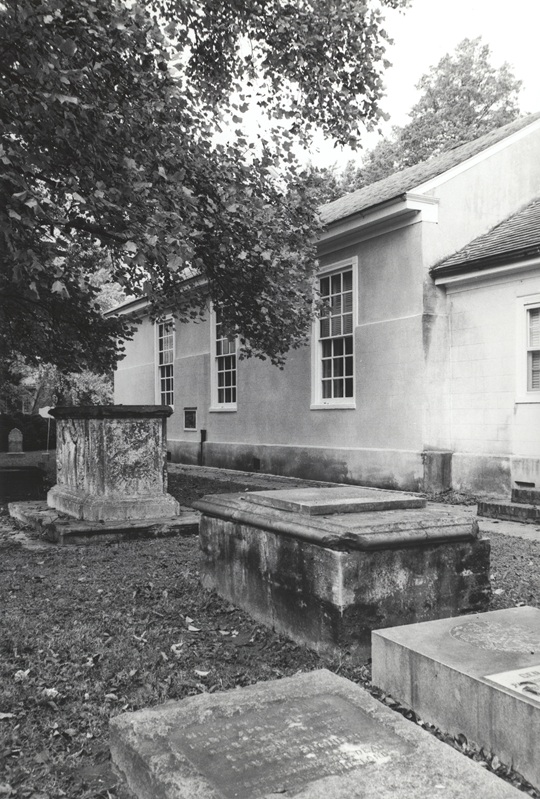
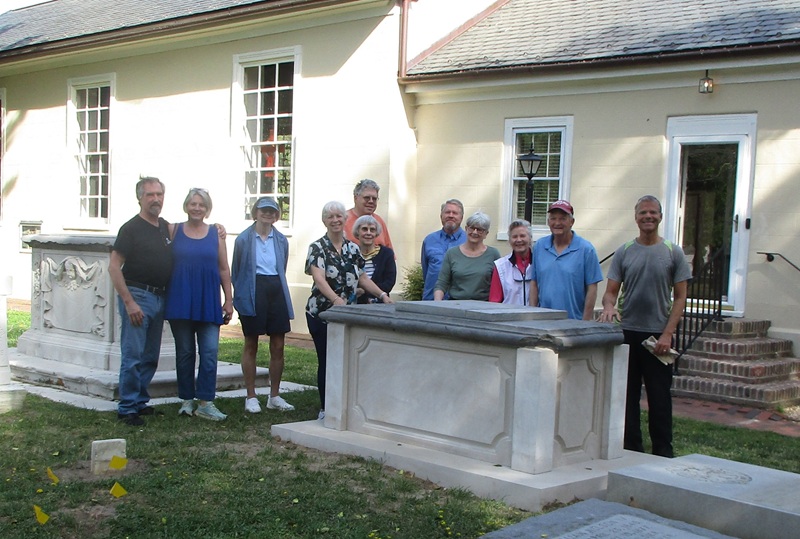
Earlier this year, the Grace Church Cemetery Committee continued this legacy of preservation by embarking on the full restoration of the monument for William Nelson (1711-1772), a colonial leader, Governor of Virginia, and father of Thomas Nelson, Jr. The restoration was completed between March and April 2026 by conservator Ta Mara Conde of Historic Gravestone Services in New Salem, Massachusetts, and Hogg Memorial Consultants of Hayes, Virginia. Conde has also restored more than a dozen damaged or degraded historic monuments and gravestones in the cemetery over the last decade.
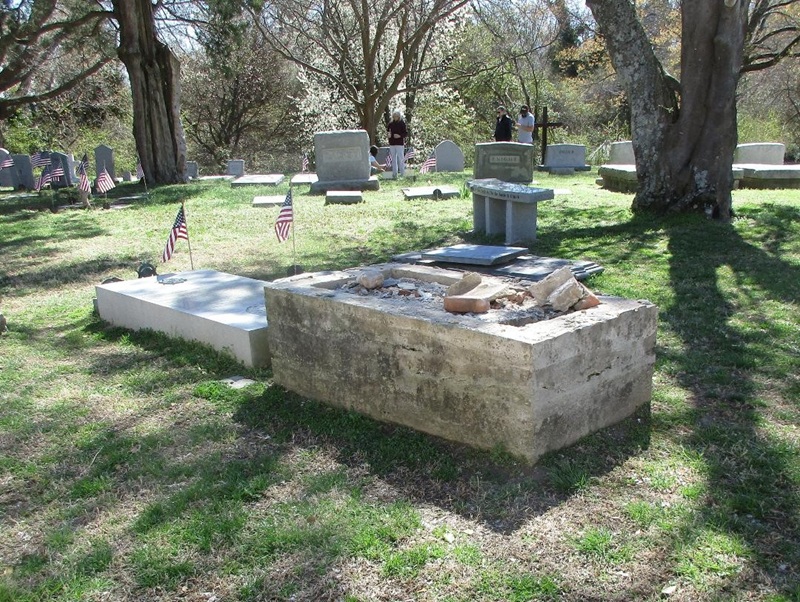
The Grace Church Cemetery Committee, under the leadership of Dr. David Miller, also convened in April to continue planning its ongoing efforts to preserve and protect the historic cemetery. Following the meeting, committee members and volunteers from the Parish participated in a hands-on workshop promoting the restoration and preservation of gravestones and monuments in the cemetery using materials and techniques approved by DHR and the Veterans Administration. These semiannual workshops have been facilitated by Rachel Popp, curator at the Isle of Wight County Museum in Smithfield, Virginia.
A comprehensive history of Grace Church prepared by Charles E. Hatch, Jr., of the National Park Service for Colonial National Historical Park can be found online here:
Hatch, Charles E., Jr. “Grace Church: General Study.” May 1970. NPS History.
https://npshistory.com/publications/york/grace-church.pdf
Legal Disclaimer:
EIN Presswire provides this news content "as is" without warranty of any kind. We do not accept any responsibility or liability for the accuracy, content, images, videos, licenses, completeness, legality, or reliability of the information contained in this article. If you have any complaints or copyright issues related to this article, kindly contact the author above.
